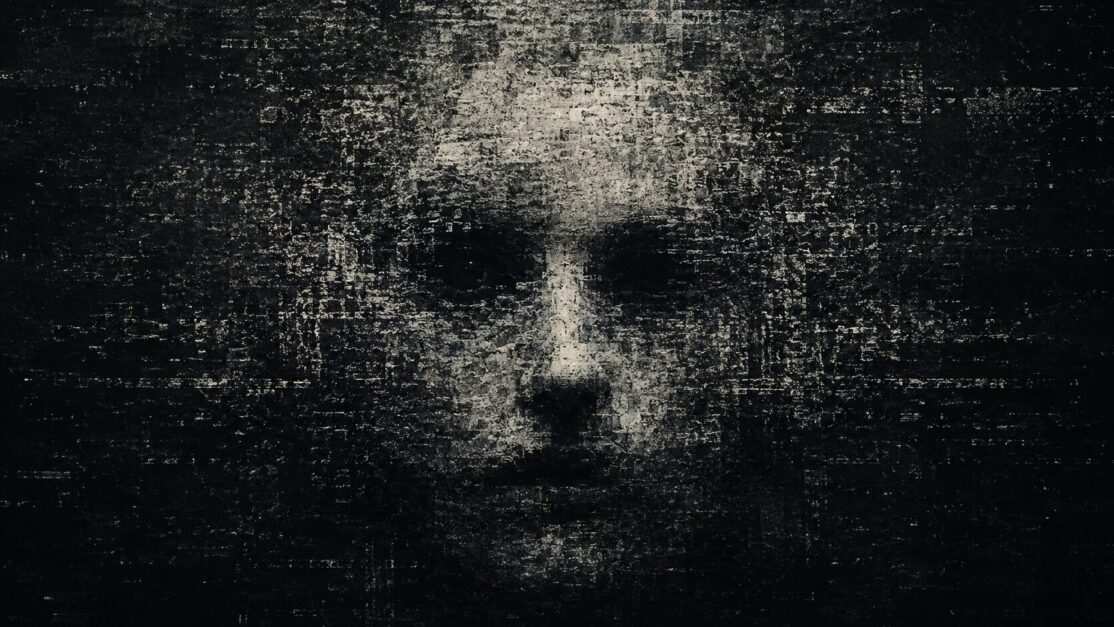
Chapter 3 of the series “The Mind’s Deceptions”
There is a voice inside us that never falls silent. It does not speak in words — it speaks in patterns. In faces that rise from water stains on a ceiling. In numbers that repeat like a message being whispered. In coincidences that feel as though someone, somewhere, wrote them just for us.
That voice has a name: apophenia. And it may be the most unsettling mechanism the mind possesses—not because it is rare, but because it belongs to every one of us. Every human mind carries it. Every human mind, at some hour, has fallen into it.
In Chapter 1, we walked the ground of why the brain sees patterns where none exist. In Chapter 2, we sat with the question of premonitory dreams—visions that seem to know the future before it arrives. Now we go further, into the place where both paths meet: apophenia, the machine that turns chaos into meaning.
When Chance Wears the Mask of a Message
Picture a hard season of your life. A number begins to follow you—on the clock, on the license plate ahead, in the coins left in your palm. The mind does not call this chance. The mind calls it a sign.
This is the threshold where apophenia takes hold: the moment randomness stops being randomness and becomes, instead, something spoken to us. There is no hidden intelligence arranging these coincidences, no cosmic hand at work. There is only a mind, shaped across millions of years, trained to find order — even where no order lives.
And it is this very confusion, between noise and message, that makes apophenia such fertile soil for psychological horror. Films, ghost stories, and old fears all feed from the same well: the feeling that something is trying to speak to us through the smallest, most ordinary details of the day.
What Is Apophenia?
The word was given to us in 1958 by the German psychiatrist Klaus Conrad, who first used it to describe an early stage of psychosis—a moment when a person begins to sense hidden threads connecting things that share no real connection at all. Psychology has since widened the word’s meaning. Apophenia is no longer bound to illness alone; it is a natural feature of the human mind, present in some measure within every one of us.
Put simply, apophenia is the tendency to perceive patterns, connections, or meaning in what is, in truth, random. It is the wider relative of pareidolia—seeing faces in objects, the subject of our earlier chapter—but it reaches further than sight alone. It touches numbers, dates, sentences, dreams, sounds, and even the shape we give to our own lives.
Apophenia is not a flaw to be ashamed of. It is the price paid for carrying the most pattern-hungry mind nature has ever made.
The Mind That Cannot Bear Chance
Among those who study the brain, a saying is often repeated: the mind is not a recorder of the world—it is a predictor of it. In every passing second, the brain is not simply watching what happens. It is guessing what comes next.
This gift of prediction kept our ancestors alive. It let them read the shifting of leaves and know, before it was too late, that something moved among them with hunger. But this same machine has no switch to turn itself off when the pattern is false. It keeps turning, keeps guessing, even when there is nothing there but pure chance.
This is why the human mind resists true randomness—resists it almost as one resists pain. Shown a truly random sequence, people will often say it does not look random enough, because real chance tends to clump and repeat in ways that feel suspicious to the eye. We would rather have order, even an order we invented ourselves, than sit inside the bare unknown.
It is this same engine—described more fully in our chapter on patterns where none exist—that makes one kind of fear more powerful than almost any other: the fear of something that seems to carry intention but does not.
The Illusion of Extraordinary Coincidence
How many times have you heard, or told, a story like this one: I was thinking of someone, and out of nowhere, they called. Or: I dreamed of that number, and the next day, there it was again.
These coincidences feel extraordinary because we forget a simple truth of numbers: the events possible in one life are vast beyond counting. We think of hundreds of people each week. We see thousands of numbers each day. We dream many times each night. Within so wide a field, coincidence is not unlikely—it is, in time, almost certain to arrive.
Psychology gives this a name: the clustering illusion—the tendency to find meaning in groupings that, given enough chances, will always appear by chance alone. The trouble is, the mind keeps no record of the thousand quiet moments when we thought of someone and nothing came of it. It remembers only the hit and lets every miss fall silently away. This hidden selection is the fuel behind every feeling that says, This cannot be chance.
It is the very same bias we traced through premonitory dreams: we hold tightly to the one dream that seemed to come true and let the hundreds that meant nothing slip from memory like water through open hands.
Numbers, Signs, and Hidden Messages
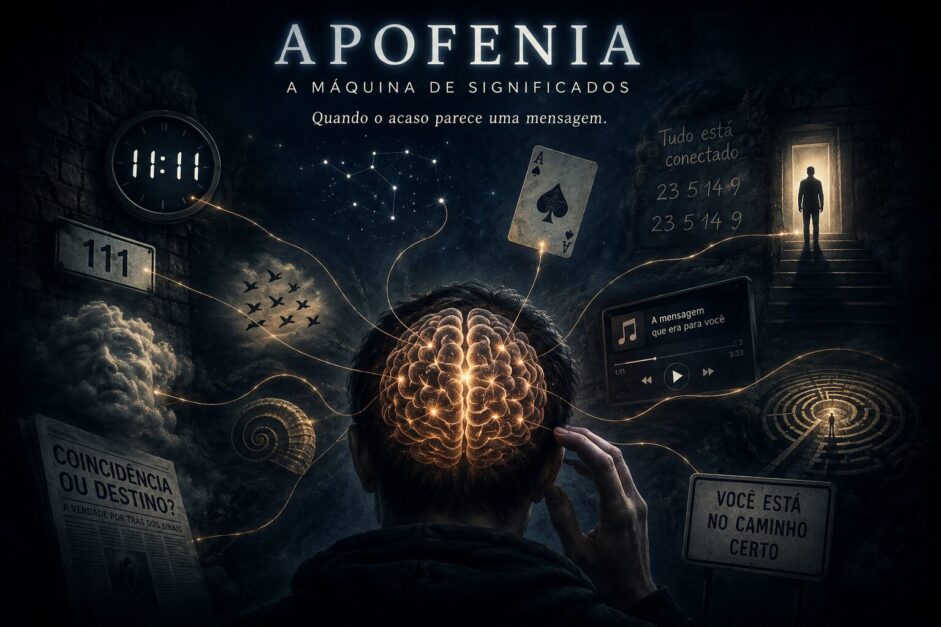
Few expressions of apophenia are as widespread as the fascination with repeating numbers—11:11, 22:22, and sequences like 333 or 444. In spiritual circles, these are called “angel numbers,” said to be messages sent down by higher beings.
Psychology has a quieter name for this: the frequency illusion, sometimes called the Baader-Meinhof phenomenon. Once someone tells us a certain number holds meaning, the mind begins to hunt for it—and since a digital clock holds only twenty-four possible hours and sixty possible minutes, finding “11:11” requires no miracle. It requires only a clock and attention turned toward it again and again.
The same hunger drives the search for hidden messages in old songs played backward, in phrases that seem, after the fact, to foretell tragedy. This has its own name too—textual apophenia—studied widely in cases where listeners swore they heard dark messages buried in reversed recordings. Most often, the sound itself was only noise. The meaning was born entirely in the listener, who arrived already hoping, already listening, for something to be found.
The Birth of Conspiracy Thinking
If there is fertile ground to watch apophenia grow at the scale of whole societies, it is in conspiracy beliefs. Studies in social psychology show that those most prone to seeing patterns are also most drawn toward conspiracy—because both spring from the same root: the need for a coherent story, even a false one, to explain what is, in truth, chaotic, tangled, or simply random.
Faced with tragedy, with crisis, with the world turning suddenly strange, the human mind resists the plainest answer: it simply happened. We reach instead for a villain, an intention, an architect hidden behind the chaos—because a world ruled by intention, even a cruel one, frightens us less than a world that is only, endlessly, indifferent.
Here lies, perhaps, the darkest truth apophenia carries: we would rather believe in a sinister pattern than accept that no pattern exists at all. The monster is easier to hold than the emptiness.
The Border Between Intuition and Illusion
Not every sense of pattern is false. Intuition—that quiet certainty that something is wrong before we know why—is often the surfacing of real signals the mind caught before the conscious self ever noticed: a flicker across a face, a shift in a voice, a small thing out of place.
The line between true intuition and false apophenia is thin, almost too thin to walk. And it is exactly this blurred border that makes the subject so haunting. How does one know if the warning felt before disaster was real perception—or only memory, reshaping itself afterward to make the story fit?
The honest answer is this: in the moment itself, certainty rarely comes. Only the cold, distant, unfeeling work of looking back can separate true signal from noise mistaken for signal. And it is this very uncertainty that has kept alive, for centuries, the belief in omens, in voices from beyond, in messages hidden inside chaos.
Does the Universe Send Signs?
Perhaps the most honest question to carry from this chapter is not, “Does the universe send signs?” but “Why do we need, so badly, for it to send them?”
Apophenia is not a shameful failure of the mind. It is the cost of carrying the most pattern-seeking brain that nature has yet made. The same gift that shows us faces in walls, messages in numbers, and fate inside coincidence is the gift that gave us language, science, art, and story itself.
The fault was never in seeing patterns. The fault is in not knowing when to stop searching for them.
And it is precisely in that blind space—between a mind that hungers for meaning and a universe that does not always offer it—that our most frightening stories are born. Because in the end, perhaps the universe sends no sign at all. It is the mind that speaks. And the mind never, truly, stops.
This is the third chapter in the series “The Mind’s Deceptions.” Continue reading: “Why Does the Brain See Patterns Where None Exist?” and “Premonitory Dreams: Coincidence or Foresight?”