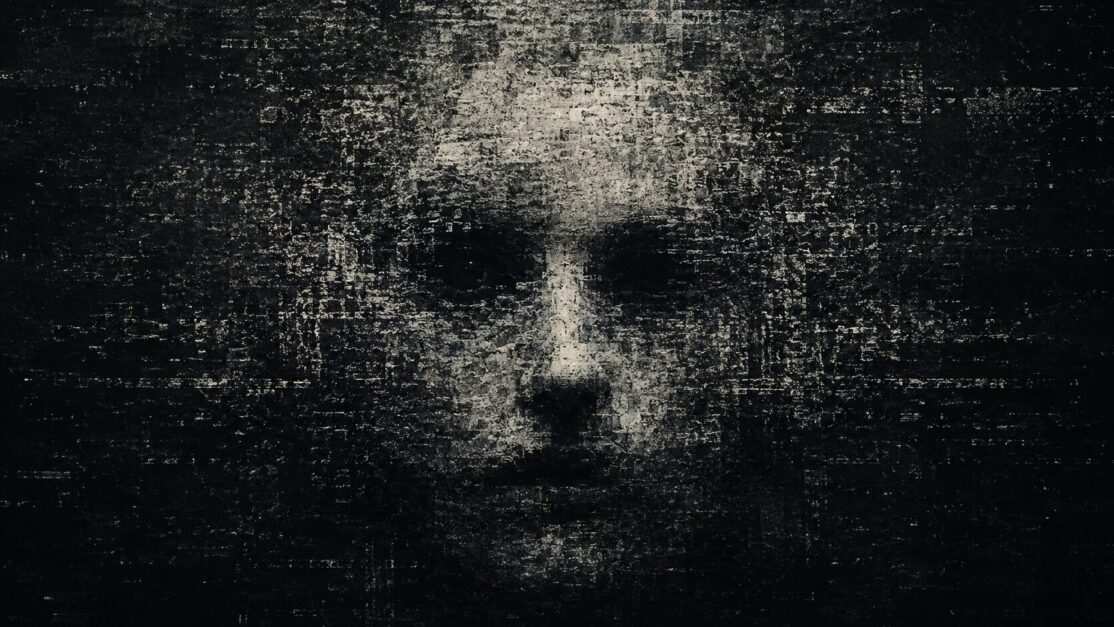
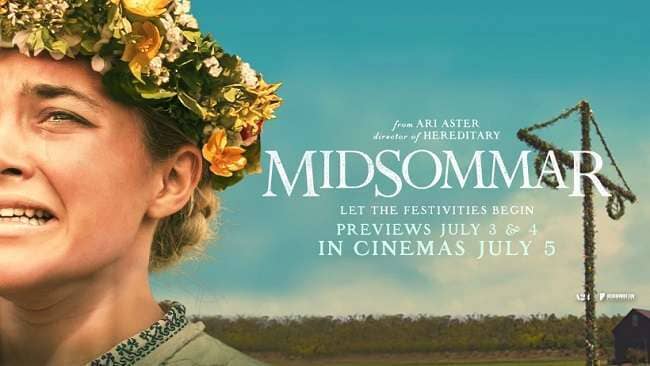
You avoid dark streets. You fear unusual silence.
Your heart pounds at an unexpected sound at 3 AM.
And yet—you keep coming back to the dark.
There is something deeply, almost pathologically strange about human beings. We avoid dark alleys. We check the back seat before getting in the car. A creak in the hallway at night can make the heart launch into the throat. The simple sensation of being alone in a house—truly alone—can make the brain manufacture presences from shadow and silence.
And yet.
We spend hours consuming horror stories. We watch disturbing films immediately before sleep. We read macabre accounts by dim light. We create monsters, feed monsters, and return to monsters—voluntarily, repeatedly, with something that feels unmistakably like pleasure.
This is the question that sits at the center of one of psychology’s most fascinating puzzles:
Why does the human mind find pleasure in experiencing emotions that, biologically, it should reject?
This is the Horror Paradox. And unpacking it reveals something far darker about us than any creature hiding under a bed.
Part I
Fear Was Never Just Fear
Horror didn’t begin in cinema. It didn’t begin in books. It certainly didn’t begin in urban legends passed around campfires.
Horror began the moment human consciousness became aware of its own mortality.
The human brain was shaped by millions of years of survival pressure. For our ancestors on the African savanna, the world was genuinely, constantly lethal. A branch snapping in the dark could mean a predator. An unfamiliar shape at the periphery of firelight could mean death within seconds. The unknown was, statistically, dangerous.
Fear was not a flaw. It was the most important tool the brain possessed.
But evolution made a second, equally important modification to the human mind—one that sits in permanent, productive tension with the fear response:
It made us extraordinarily curious.
The same species that learned to flee danger also learned to study it, name it, ritualize it, and eventually seek it out deliberately. Because understanding a threat, even a terrible one, offered a survival advantage over simply running from it forever.
This is where the paradox begins. Because what threatens us also, inevitably, fascinates us.
Part II
The Mind Hates the Unknown — And Is Addicted to It
There is an almost compulsive force operating within the human mind: the need to understand what is hidden. Psychologists call it “epistemic curiosity“—the drive to close informational gaps, to know what lies behind the closed door, and to hear the sound fully before categorizing it as safe.
It is why, watching a horror film, we lean forward when we should lean back. Why we click on disturbing headlines. Why we listen to imaginary footsteps in the dark with our entire attention, even while terrified. The brain wants to flee. But it also, desperately, wants to know.
Horror lives precisely in this conflict—the tension between the survival instinct and the psychological need to discover. It is the crack between two fundamental drives, and the best horror has always known how to live inside that crack.
The most effective horror never shows everything. The invisible terrifies more than the explicit—because the human imagination is the cruelest creature that has ever existed. And it has access to your specific, personal fears in ways that no screenwriter ever could.
Part III
The Real Monster Rarely Has a Face
When most people think about horror, they visualize the external—ghosts, demons, deformed creatures, and entities from beyond the rational world. But the deepest terrors almost never have physical form.
Psychological horror endures because the human mind has a far more primal fear than any monster:
The fear of losing itself.
Fear of
Losing Control
The horror of a body or mind that no longer responds to you — possessed, paralyzed, dissociated. More terrifying than any external predator.
Fear of
Losing Identity
Who are you when the self begins to fragment? The horror of not recognizing the face in the mirror, of becoming someone unrecognizable.
Fear of
Losing Sanity
The terror of a reality that starts to crack. Of not being able to trust your own perceptions. Of the mind turning against its owner.
Fear of
Losing Reality
The existential horror of discovering that what you believed was solid — relationships, memory, the world itself—was never as stable as it appeared.
The fear of monsters is almost childlike compared to the fear of losing your mind. And perhaps this is exactly why certain horror stories stay with us for years — because they don’t attack our eyes. They attack our relationship with reality itself.
Part IV
Horror as an Emotional Laboratory
Some claim we consume horror because we enjoy suffering. This is a misreading of the experience.
Horror offers something far more precise: a controlled experience of fear. A safe simulation of chaos. A rehearsal for the unbearable, conducted at a protective distance.
When watching a frightening film, the brain activates genuine physiological responses—adrenaline, cortisol, elevated heart rate, and heightened sensory alertness. The body responds as though the threat were real. But there is one crucial difference that changes everything:
We know we are safe.
This knowledge transforms horror into a kind of emotional training ground. A space where we can symbolically encounter:
- Death — without dying
- Persecution — without being hunted
- Loss — without losing
- Mental collapse — without breaking
- The void — without falling in
It is like visiting the abyss through bulletproof glass. You feel the vertigo. You feel the pull. But you don’t fall. And when you step back, something in you is slightly different — slightly more acquainted with the edge.
Excitation Transfer — The Science of the Horror Rush
Psychologist Dolf Zillmann’s research on excitation transfer helps explain this precisely. When fear is experienced in a safe context, the brain releases a cocktail of stress hormones—adrenaline, cortisol, and endorphins. Because the body is physically safe, this arousal state has nowhere to discharge into flight or fight. Instead, it converts stress into relief, excitement, and a vivid, acute sensation of being fully alive.
This is why the scariest scene in a horror film is so often followed by nervous laughter. The laughter isn’t disrespect for the terror — it’s the nervous system finding a release valve for the emotion the body just processed.
The fear was real. The danger was not. And in the gap between those two facts lives something that feels, unmistakably, like pleasure.
Part V
Horror as Mirror — The Dark That Shows Us Ourselves
Perhaps horror doesn’t exist primarily to show us monsters. Perhaps it exists to reveal humans.
Because frightening stories consistently expose what polite social life requires us to suppress:
- Guilt that has never been spoken
- Rage with no sanctioned outlet
- Grief that hardened into something else
- The paranoia that lives just beneath the social surface
- The violence the civilized mind contains but never admits
- The loneliness that persists even in company
The supernatural, in the best horror, is almost always metaphor. The ghost is grief that refuses to dissolve. The demon is the shadow self—the part that was buried because the world required it. The haunted house is the mind that has locked certain rooms and lost the keys.
and the oldest and strongest kind of fear is
fear of the unknown.”
— H.P. Lovecraft
This is why horror that operates on a purely external level rarely endures. We forget the monster with the specific design. We remember the story that made us feel, for a moment, that we recognized something in ourselves that we would have preferred not to see.
Part VI
The Human Terror of the Void — Mortality, Mystery, and the Abyss
There is a silent terror that cuts across all human cultures and all of recorded history: the fear of the unknown. Not merely of the dark, or of predators, or of pain—but of the fundamental incomprehensibility of existence itself.
We do not know what happens after death. We cannot fully explain consciousness. We cannot be certain our perception of reality is accurate. We cannot entirely know ourselves.
Horror — especially the best psychological horror — exploits this existential fracture. It finds the crack between what we understand and what we don’t, and it applies pressure there.
H.P. Lovecraft built an entire literary cosmology on this principle: the idea that the universe is not hostile to humanity but simply indifferent—that we are brief, accidental, and utterly irrelevant on any cosmic scale. The horror of his best work is not the monsters. It is the scale. The suggestion that the frameworks we use to make the world comprehensible are themselves a kind of comfortable fiction.
The mind can confront almost anything it can name. What destroys it — what produces the deepest, most lasting horror — is the encounter with what it cannot name.
Part VII
The Monster Has Changed Shape — Horror in the 21st Century
The monsters that terrify each era are never accidental. They are precise psychological portraits of what that era fears most.
The Victorian era produced vampires — aristocratic, seductive, immortal creatures that drained the vital energy of the living. The anxiety beneath: sexuality, class, the corruption hidden beneath refinement.
The mid-20th century gave us aliens—the fear of the other arriving from outside to replace us, to study us, to find us inadequate. The anxiety: Cold War paranoia, the loss of individual identity within mass society, and the terror of being observed.
And now?
Our monsters have migrated. They live in:
- Algorithms that know us better than we know ourselves
- Technologies that dissolve the boundary between the real and the simulated
- The surveillance that is constant, invisible, and total
- The loneliness that deepens in proportion to connectivity
- The identity crisis of the digitally fractured self
- The anxiety that has no object — the ambient dread of existing in an accelerating world
Contemporary psychological horror doesn’t need castles. It needs screens. Feeds. Deepfakes. The digital hall of mirrors where we no longer know which reflection is us.
The monsters changed shape. The nature of fear — that deep architecture, that evolutionary device, that mirror of the psyche — remains identical to what it has always been.
Part VIII
Horror as Psychological Necessity — Not Just Entertainment
Perhaps we don’t just consume horror as entertainment. Perhaps we need it as a psychological tool.
Terror forces us to look at what comfort allows us to avoid:
- Our fragility — the illusion of safety stripped away
- Our mortality — the fact we spend most of our lives successfully not thinking about
- Our capacity for darkness — the shadow the self casts but rarely examines
- Our existential loneliness — the irreducible aloneness of consciousness
- Our fundamental uncertainty—about the world, about other people, about ourselves
Horror reminds us that we are human. And there may be something deeply liberating in that reminder — because confronting fictional fear can make real fear slightly more bearable. Because naming the darkness, even in story form, reduces its power over the parts of us that have never learned to name things at all.
Researcher Margee Kerr, who has studied the psychology of fear extensively, found that controlled fear experiences can reduce anxiety, increase self-confidence, and produce a genuine sense of connection between people who experience them together. We go into the dark with others and come out slightly closer. Slightly more certain we can survive.
Conclusion
The True Paradox — We Don’t Just Want Happiness
In the end, the horror paradox reveals an uncomfortable truth about human nature:
We do not only seek happiness. We seek intensity.
We want — perhaps need — to feel something genuinely true. Even if it hurts. Even if it frightens. Even if it briefly destroys us before reassembling us on the other side of the experience.
Horror is one of the oldest technologies the human imagination possesses for doing this safely. For visiting the edges of the self without falling off. For rehearsing the worst and discovering, again and again, that we are still here afterward.
And perhaps that is why we keep returning to the dark.
Because something is there. Something ancient. Something that cannot be fully explained or fully eliminated. Something that knows our name and has always known our name, long before we had the language to know its.
And perhaps the greatest terror of all is not what lives in the shadows.
It’s discovering that what watches from the dark has been watching from inside the mind all along.